

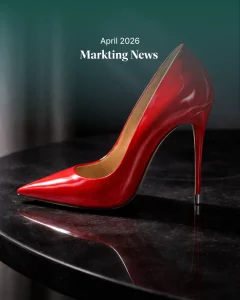
This week, it’s been hard to avoid The Devil Wears Prada 2.
We’ve seen a wave of sequels and reboots lately, and most of them go out of their way to remind you what you loved about the original. You see it in things like Mean Girls, or even Sex and the City/(And Just Like That…). The references are obvious, the callbacks are constant, and the whole thing leans heavily on recognition.
The Devil Wears Prada 2 rollout doesn’t reintroduce itself. It just steps back into the spotlight like it was always part of the conversation.
1
They understood the product: people care about the world, not the plot
The trailer makes the strategy clear right away. It brings you straight back into Runway, into the tone, the pacing, the environment, without walking you through how you got there.
That works because the appeal of this movie was never really about the storyline. It was always about the world around it – fashion, status, the characters, and what it felt like to be inside that environment.
You can see that same thinking in the Meryl Streep x Anna Wintour Vogue feature. The focus isn’t on explaining the sequel or building out the narrative. It’s about placing the film back into the center of fashion culture, right where it originally got its weight from.
Even smaller moments follow that same pattern. The cerulean reference showing up again through Anne Hathaway isn’t used to explain the plot or revisit the storyline, it taps into a shared memory of that world and lets people engage with it on their own
The campaign stays consistent with that idea across everything it does. It treats the world as the product, and everything else supports that.
2
They used culture as distribution, not just media buying
Most of the visibility in this campaign isn’t coming from paid media. It’s being built through the way it shows up across culture.
The press tour is doing a lot of the heavy lifting. Anne Hathaway’s appearances, her styling, and even small moments like the cerulean reference turn into content that gets picked up and reshared across platforms. Those moments travel because they give people something to engage with, not something they’re being asked to watch.
You can see the same pattern in how the campaign moves across different cultural spaces. The Vogue coverage places the film inside fashion media. The Gaga and Doechii track in the trailer pulls it into music. The global press tour through cities like Tokyo and Seoul extends that visibility internationally.
Each of these isn’t just exposure on its own. Together, they create a loop where the campaign keeps showing up in different places, through different voices.
That’s what builds the scale.
At a certain point, it starts to feel like it’s everywhere, not because of how often you see an ad, but because of how many different places it shows up.
And that’s where it picks up that “everybody wants this” energy, without ever needing to say it out loud.
3
They made everything feel current and elevated, not just nostalgic
This campaign is clearly based on where culture is right now.
Everything around it feels current because of where and how it’s showing up. The Vogue feature with Anna Wintour, the way Anne Hathaway is styled across the press tour, and the outlets covering it all place the film inside today’s fashion conversation, not outside of it.
The music choice plays into that as well. Using a Gaga and Doechii track in the trailer pulls the campaign into a more current cultural space instead of relying on something tied to the original film.
The timing reinforces it further. The alignment with the Met Gala window, along with moments like the Vogue-hosted screening, makes it feel connected to what’s happening right now, not something being revisited from before.
What stands out is how the campaign carries the familiarity of the original without leaning on it too heavily. The references are there, but they’re presented through a more current lens—through styling, through media, through context.
That’s what gives it that elevated feel.
What This Really Shows
This campaign works because it stays focused on what actually matters.
The world is the product.
Culture is the distribution.
And everything around it feels current enough to belong right now.
That’s what gives it weight.
It doesn’t feel like something coming back.
It feels like something that was always part of the conversation.